Mostrando postagens com marcador Matthews Greig. Mostrar todas as postagens
quarta-feira, 19 de março de 2014
Swan Lake’s second show of the Season: March 18th 2014
What to expect? Nureyev’s 1964 Version of Lake is not one of my favorites… even though it was modified in 1984 into a new Version for the Paris Opera, it was never changed for the State Opera in Vienna, the very city in which it had its world premiere in 1964 (with Fonteyn and Nureyev getting a record of 89 curtain calls).
Tradition plays a big role in this country even when it is questionable and prevents improvements…
In 1964, having danced already in different versions of “Lake” (including Royal Ballet’s , masterly done by Ashton) Nureyev decided to move the main focus of the story from the Swan(s) to Siegfried. Also a very questionable decision…
To my opinion, Nureyev’s ego was so big that he committed the mistake of turning a “woman’s ballet” into one in which the danseur is the center of attractions… a very egocentric reaction.
For instance, one of the most beautiful and lyrical moments in ballet history is the very end of the 2nd act-pas de deux (in which Odette slowly turns one pirouette, makes a developée, turns then two pirouettes to make another developée and finish her 3 or 4 turns, falling to the side into the arms of Siegfried - take a look at the programme's cover, it's there - and then “falls” into an arabesque penchée in which her hand falls slowly at the very last note of music). But this does not exist for Nureyev… He simply moved the limelight away from the ballerina in one of her most significative moments and made Siegfried perform a short solo instead – to some other music! Ghastly!
On the following video you can see exactly what I mean, about the End of the 2nd act-pas de deux:
Vladimir Shishov & Liudmila Kononalova in a Gala, last year! And the end of the Adagio just like I described above...
But back to March 18th... Nureyev's use of music is also very questionable – we are not accustomed to it especially in the Black Swan’s pas de Deux. I have read once that this was supposedly so in the original score by Tchaikowsky. But I could never found real evidence of that…
It is definitely interesting to compare yesterday’s performance with the 1966 video… How technique and physical ideals have changed… strange: I don’t remember Fonteyn doing the 32 Fouettés EVER in the third act – I believe she never could do them… I’ll have to watch that video again
Yesterday the curtain went up and nothing really happened. Not at first. Even if the stage was full of people. The same way it would later happen during the Opening of the third act. There was some walking around but no acting, no energy, no feeling. As in many parts of the show yesterday, it seemed to take quite a long time before dancers could “enter” their roles, “warm-up” inside them. But there were exceptions.
One of the greatest exceptions of the above mentioned phenomenon is Vladimir Shishov. Really feeling “at home” within Siegfried’s soul, he showed us that this is HIS role.
No question about it.
A grown-up man performing a grown-up man. In complete command of the character, Mr. Shishov showed to us how right he is for this role. Without any phoney sentimentality or pretense he didn’t attitudinized the character. Much on the contrary: in certain moments (known to me from the 1966 film that was made in Vienna) even Nureyev exaggerates in his right to be a central figure. He is simply too often on stage (in comparison to other versions). Mr. Shishov’s more human incarnation of the Siegfried-persona turns him into a more believable character.
One of the fine things about this role is also his very supportive ways concerning Odette/Odille. The Danseur has also to be a great partner and Mr. Shishov is definitely one (and of course exactly the same way like he is a "danseur noble")!
Just the kind of dancer that leaves us calm and relaxed while he is partnering because we know that the ballerina is in very good hands.
After some months of sick leave Liudmila Konovalova (Elle est mignon!!!!) had to jump into yesterday’s performance because Olga Esina unfortunately hurt herself during the premiere on the 16th: after not having seen her on stage for a long while I felt unease during her first moments as Odette.
Wasn’t she, Odette, supposed to feel afraid during her first meeting with Siegfried?
She wasn’t so… but I had just forgotten that Miss Kononalova is NOT the fearful type of dancer. Her interpretation was cleverly adapted by her to her own personality without losing any of its assets.
During the second act I felt that she sometimes hurried a bit, that she was a bit ahead of the music and that small nuances of the role were not being completely used to the end. This feeling passed with time… perhaps it was due to some nervousness after being for so long away from the stage. But fact is that she gave us a marvelous portrayal of Odette and especially Odille. The audience was static.
At the End of the performance Miss Kononalova and Mr. Shishov received a long, standing ovation.
Very well-deserved indeed.
The Corps de Ballet disappointed me a bit during the second act. Especially during the crucial long parts in which the dancers have to stay still, not looking stiff, for a long time one could see that there is still a lot of work to be done: different head positions, arms that were too much high bent. But most of all I missed the lack of discipline during those long moments: many dancers were following the principals with their eyes and some even with their heads.
This should have been noticed during rehearsals, but… were there enough rehearsals?
Paying long attention to lovely Swan, Miss Flavia Soares, I caught myself wishing that there would be more discipline, like hers. She shows insight, beauty in her performance... but of course she is much more experienced than some of the teen-agers that are having their first season with the ballet. Experience cannot be replaced.
Siegfried’s “friends” Ioanna Avraam, Kiyoka Hashimoto, Greig Matthews and Dumitru Taran were the next thing closer to perfection - Synchrony, clean techniques, joy, personality, interpretation. Dancers that entered the stage and had no need to warm-up into their characters! Beautiful!
The little swans (even if for some there should be a "pas de chat urgent rehearsal") brought down the house: Maria Alati, Ioanna Avraam, Rui Tamai and lovely Eszter Ledán performed beautifully. Miss Ledán’s stage presence with her charm and lovely looks that are combined with a strong technique becomes clearer every day. She was also a delight as one of the noble young ladies that are presented to the prince: contrary to others she never left her role, even during the long “waiting” while The Black Swan and the Prince are performing.
The big Swans were beautifully performed, especially by Prisca Zeisel, a talented and very versatile young Ballerina who not only represents all the sweetness of a swan but also gave to the audience a very spirited performance as the Spanish Dancer (bellow) on Act III.
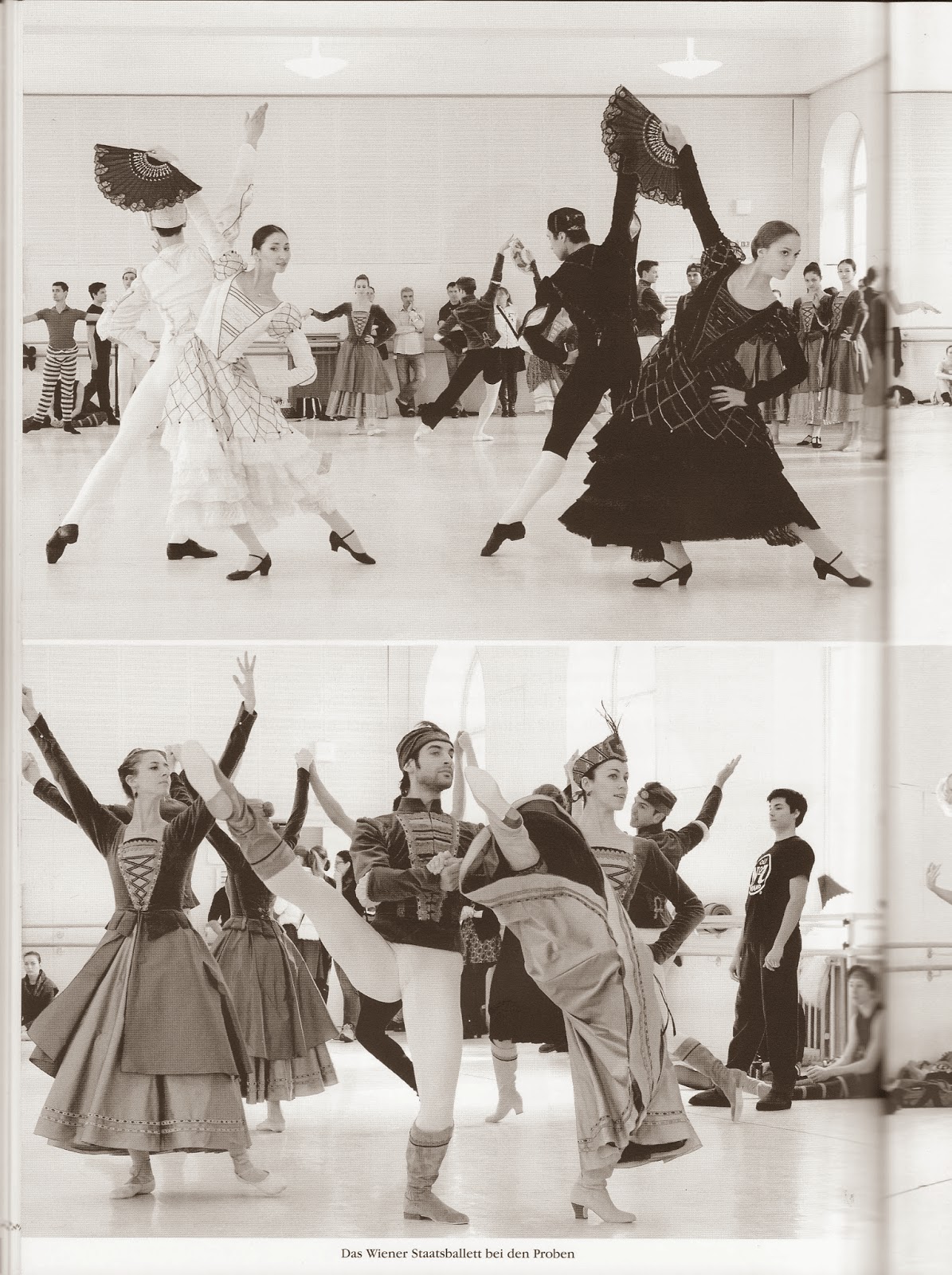
The hungarian dance was a delight – like a firework. But what else could you expect from the lively combination between Alice Firenze and Mihail Sosnovschi? (above) Both remind me somehow of tigers ... feline, strong, elegant… One can feel the joy and fun that both are having while performing. But wasn’t Callas, with all her strength, also called “La Tigresa”?
Oh, by the way; there is another expression that was once said by Fred Astaire about Cyd Charisse that would apply very well to Miss Firenze and Mr. Sosnovschi: beautiful dynamite!!!!!!!!
The polish dance was masterly performed by athletic Alexis Forabosco (bellow), using his legs to the very best even though the choreography is a bit boring – but definitely not so tedious like the neapolitan dance.
But what could one expect? The music belongs to the more tediously uninteresting pieces that Tchaikowsky ever composed! And so is the choreography: not worth mentioning.
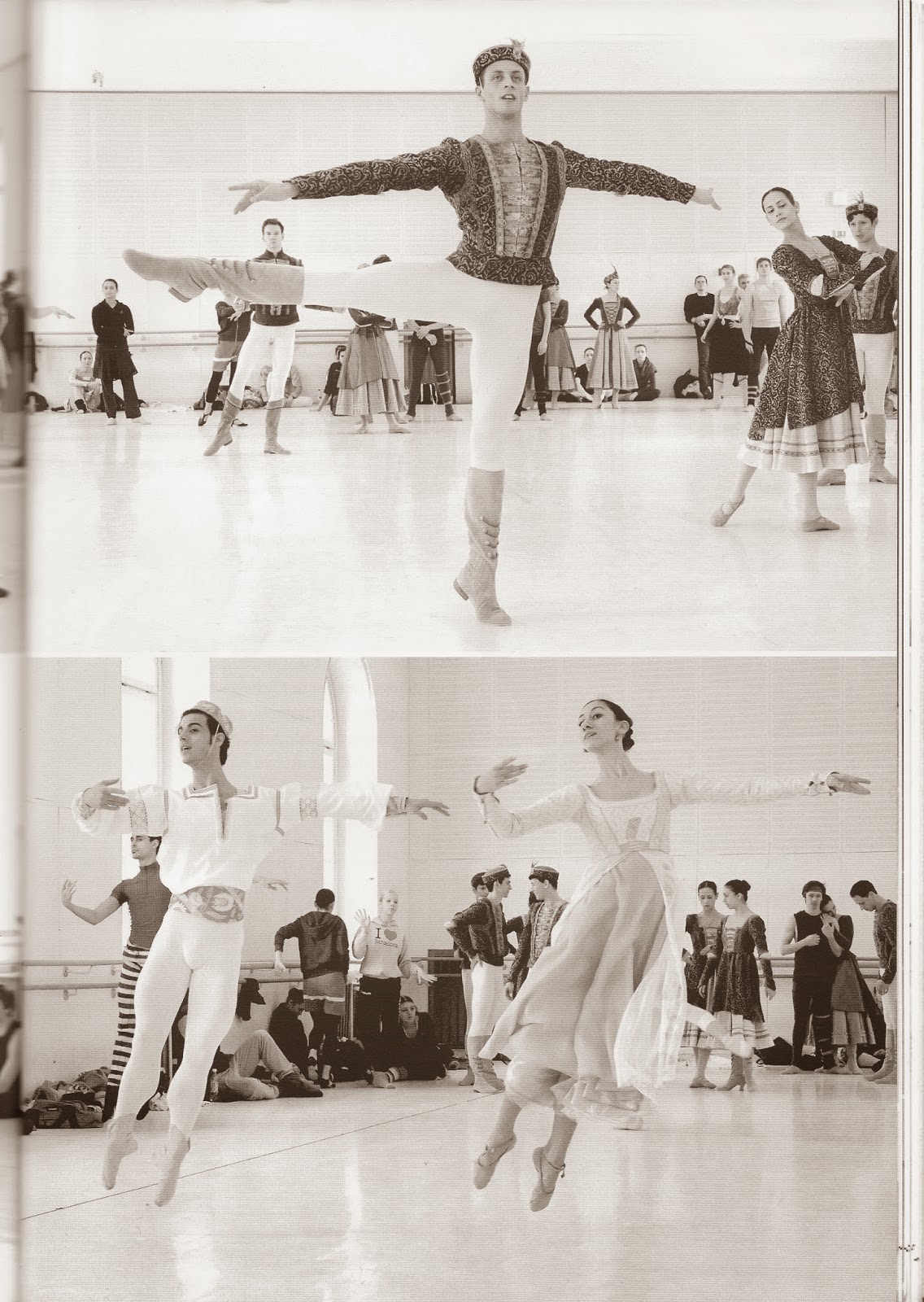
Costumes by Luisa Spinatelli have not caused such an impact on me. In fact I think that the tutus in the second act could have been a bit fuller – and the tops more harmonically cut. Also Odette’s Headdress left much to be desired – it simply did not “caress” enough Miss Konovalova’s face.
Except perhaps for The Queen Mother’s (Dagmar Kronberger) exquisite headdresses on both the 1st and the 3rd Acts.
Rotbart’s (Eno Peci) costume that was so often mentioned was OK (but the headdress made him look more like a cock). Unfortunately Rotbart’s performance is resumed to a bit more than running around in a sort of frenzy… but let us be honest: would Nureyev create rivalry for himself on stage? He was much more preoccupied in creating his Siegfried than choreographing many parts and other roles of “Swan Lake”…
Resuming last evening: it was a very rewarding experience… experiencing so many talents that at the same time made me try to analyze more and more the complexity if this work and Nureyev’s motives.
But there was one most disturbing fact that was quite clear to me: Dancers are looking tired… and it is still too early in the Season for that. What is happening? Olga Esina injured herself, Davide Dato broke his foot... This is something to think about...
P.S. all pictures except Miss Soares' taken from the Wiener Staatsballet's programme.
Miss Soares' picture kindly permmited by Mr.Thomas Schulz. Thank you!
P.S.2 and just now, kindly sent by Davide Dato, this lovely picture. When Mr. Shishov went on his knees to give Miss Konovalova these flowers, the audience went mad!!!!!!!
domingo, 17 de novembro de 2013
Blue Beard's Secret / Blaubarts Geheimnis / O Segredo do Barba Azul (Volksoper, Nov. 2013)
("Tertúlia" in three languages / in drei Sprachen / em tres idiomas)
--------------- ENGLISH ---------------
Some days ago I realized once more how so very important (and nearly essential) it is to watch certain shows a long time after the have been performed for the first time. Performers, especially dancers, who have been present during the most of the run don’t have to care anymore about “technicalities” and can concentrate on what is really important. The character. They attain qualities and nuances that could not have been there before, when the show premiered. A simple matter if time –it can take some long time to fully discover the inner qualities of a part. Many tiny particles that compound the characters become alive – and nearly palpable.
During the performance of “Bluebeard’s Secret” at the “Volksoper” last week I was witness of another one of these special occasions that I am referring to during the run of a Ballet: Kirill Kourlaev’s daring performance after nearly one year performing the part, has achieved that certain point when the character is “simply there”, that turns his performance into a “visceral one”. Mr. Kourlaev’s very confident stage presence, his height, strength, especially jumping, turned his Bluebeard into someone of flesh and blood, a bit mental, bestial, desperately desiring his beautiful wife but not quite in the same wavelength like her…
Eszter Ledan presented us with a beautiful, very strong and determined Judith. Even tough she did not have long rehearsals, the audience simply had not the impression that she may have been preoccupied with trivialities – like for example the music… she was at ease, in full command of the role and its technical challenges (light years from classical ballet) and in a complete symbiosis with the aggressive, controlled portrayal given by Mr. Kourlaev. Amazing.
I had seen this role before, danced by the exquisite Alice Firenze… Unforgettable… But I must say that also Miss Ledan’s performance was a revelation.
One of the Highlights of the evening was Rafaella Sant’Anna’s “Mother”. Total commitment on stage. Having seen Miss Sant’Anna on many other occasions I can definitely say that she happens to be a friendly, beautiful, sweet performer with lots of humour (Who can forget her on Roland Petit’s “Die Fledermaus”????).
But as “Mother” she turns herself into a dangerous, possessive, commanding, ugly woman. I was honestly afraid.
But that is exactly what I said at the beginning of this short critic: if you are a Balletomane it is more than essential to watch performances during the run of the show…
Chapeau to Andrey Kaydanovskiy, who for the first time caught my full attention. And he did really caught it. Mr. Kaydanovskiy’s best dancing performance which I have seen up to now.
A contemporary language seems to suit him better.
The rest of the cast should be mentioned. Great performances by talented dancers like Greig Matthews doing just bits, lovely Flavia Soares in full command of her two roles (Yes!) after just one rehearsal, Dumitru Taran, Alexandru Tcacenco and Clara Soley! Also Misha Sosnovschi in a role that I do not consider quite appropriate for him and his partner, beautiful Maria Alati (She partnered him in “La Sylpide”): not only a beautiful woman, also a beautiful dancer.
Stephan Thoss’ choreography is no piece of cake. Extremely difficult and tiring for the dancers without reaching visual effects and with a certain tendency to repetitiveness. One that does not really appeal completely to audiences. Added to the gloomy music of Henryk Górecki (other parts are from Philip Glass) its effect on one’s soul tends to be one of anguish, depression and emotional unbalance. By the end of the performance one could really feel that all efforts to milk applause were worthless – if the Russian fan club sitting on the box near to mine would not have been there, the applause would have died much sooner. One should not forget that Volksopera’s Audience is not an international one, used to Ballet as a language.
The costumes were simply awful. Cheap. Some boys, especially Mr. Sosnovschi, looked like they were wearing evening pajamas!
At last I am going to mention something that so many people think – and never dare to utter: I have the feeling that the first and second acts of the piece that we (nowadays) watch as “Bluebeard’s Secret” were choreographed separately. Perhaps the fact of having a “full evening credit” made both become one piece…
I left the theatre tired and sort of worn out… once again that was the impact that this Ballet had left on me. I even thought of taking some vitamin D, thanks to Mr. Thoss’ work. I had forgotten all about his constant use of turned-in dévelopés, his use of the floor and other clichés… they did not matter anymore.
All of a sudden on the way home I realized what had been bothering me all the time…
It came to me as clear as water: What does Mr. Thoss think about human relationships? A game about Dominance and Submission? What a sad, pathetic, complicated way of looking at things… I do not share these feelings with him.
--------------- DEUTSCH ---------------
Vor einigen Tagen habe ich noch einmal festgestellt wie wichtig (und fast unerlässlich) es ist gewisse Vorstellungen anzuschauen, lange nachdem sie zum ersten Mal gespielt wurden. Darsteller, vor allem Tänzer, die während der meisten Spielzeit aktiv waren, müssen sie sich nicht mehr um den technischen Aspekt kümmern und können sich auf das Wesentliche konzentrieren. Die Rolle. Sie erreichen Qualitäten und Schattierungen, die hätten vorher nicht sein können, als das Stück Premiere feierte. Eine einfache Frage der Zeit – es kann wirklich lange dauern bis man die inneren Facetten einer Rolle wirklich entdeckt hat. Viele kleine Partikel, die die Rolle zusammensetzen werden lebendig – und fast greifbar.
Letze Woche, während einer Vorstellung von „Blaubarts Geheimnis“ war ich Zeuge eines dieser besonderen Momente, auf welche ich mich beziehe, während der Spielzeit eines Ballets: Kirill Kourlaevs wagemutige Darstellung, nach fast einem Jahr in der Rolle, hat den richtigen „Punkt“ erreicht in welchem die Figur der Rolle einfach „da ist“ und der seine Darbietung in eine viszerale Darbietung verwandelt. Herrn Kourlaevs selbstbewusste Bühnenpräsenz, seine Größe, Kraft, vor allem bei den Sprüngen, haben aus seinem Blaubart eine Person aus Fleisch und Blut gemacht, ein wenig psychisch übergeschnappt, bestialisch, in extremen Verlangen für seine Frau aber nicht wirklich in der gleichen Wellenlänge wie sie...
Eszter Ledan schenkte uns eine schöne, sehr starke und entschlossene Judith. Obwohl sie nicht wirklich genügend Probezeit hatte, hatte das Publikum auf keinen Fall den Eindruck sie sei mit Trivialitäten besorgt – wir zum Beispiel die Musik... Sie war entspannt, in voller Kontrolle der Rolle und ihren technischen Herausforderungen ( Lichtjahre vom klassischen Ballet entfernt) und in einer vollkommenen Symbiose mit der Darstellung von Herrn Kourlaev. Verblüffend.
Zuvor hatte ich diese Rolle, von der exquisiten Alice Firenze getanzt, gesehen... Unvergesslich... Aber ich sage, dass auch Frau Ledans Darbietung eine Offenbarung war.
Einer der Höhenpunkte des Abends war Rafaella Sant’Annas „Mutter“. Totale Hingabe auf der Bühne. Da ich Frau Sant’Anna in vielen anderen Stücken gesehen habe, kann ich durchaus sagen, dass sie eine freundliche, schöne, süße Darstellerin mit viel Humor ist (Wer kann sie in Roland Petits „Die Fledermaus“ vergessen?).
Aber als „Mutter“ verwandelt sie sich in eine gefährliche, besitzergreifende, beherrschende, hässliche Frau. Ich war ernsthaft verängstigt.
Aber das ist ganz genau was ich am Anfang dieser Kritik sagte: wenn Sie ein „Balletomane“ sind, es ist mehr als notwendig Vorstellungen während der Spielzeit anzuschauen.
Hut ab für Andrey Kaydanovskiy, der zum ersten Mal meine volle Aufmerksamkeit geweckt hat. Und er hat sie wirklich geweckt. Diese war Herrn Kaydanovskiys beste Tanzdarbietung, die ich bis zum heutigen Tag gesehen habe. Die „contemporary“ Sprache passt ihm besser.
Weitere Darsteller sollten erwähnt werden. Großartige Darbietungen von Tänzern wie Greig Matthews, in winzigen Teilen der Choreografie, entzückende Flavia Soares in voller Beherrschung von zwei (JA!) Rollen nach einer einzigen Probe, Dumitru Taran, Alexandru Tcacenco and Clara Soley! Auch Misha Sosnovschi, in einer Rolle die ihm nicht sehr gut passt und seine Partnerin, schöne Maria Alati (Sie tanzte mit ihm in „La Sylphide“): nicht nur eine schöne Frau, eine schöne Tänzerin.
Die Choreografie von Stephan Thoss is kein Honiglecken. Extrem schwierig und ermüdend für die Tänzer ohne visuelle Effekte zu erreichen und einer gewissen Tendenz zur Wiederholung. Eine Chroreografie ohne Anreiz für das Publikum, die hingefügt zu der düsteren Musik von Henryk Górecki (andere Teile sind von Philip Glass) ihre Wirkung auf unser Gemüt mit Kummer, Depression und emotionaler Unausgewogenheit tendieren lässt. Am Ende der Vorstellung konnte man wirklich fühlen wie alle Anstrengungen um Applaus zu gewinnen wertlos waren – wenn nicht der russische Fan Club in der Loge neben an gewesen wäre, hätte der Applaus viel früher geendet. Man sollte nicht vergessen, dass das Publikum der Volksoper kein internationales Publikum ist, das zum Ballet als „Sprache“ gewohnt ist.
Die Köstume sind einfach schrecklch. Billig. Einge Tänzer, vorallem Herr Sosnovschi, scheinen Pyjamas zu tragen!
Zum Schluss werde ich etwas erwähnen, das viele denken – und sich niemals zu sagen trauen: Ich habe das Gefühl, dass beide Akte, die wir als „Blaubarts Geheimnis“ kennen, getrennt choreografiert wurden. Vielleicht war es wichtig ein „Vollabend-Ballet“ zu vermarkten...
Ich habe das Theater müde und ausgepowert verlassen... Noch einmal wiederholte sich die Auswirkung, die dieses Ballet auf mich ausgeübt hat. Ich dachte sogar an Vitamin D, Danke zur Arbeit von Herrn Thoss. Ich hatte alles vergessen über seine konstante andedant dévelopés, seine Benutzung des Bodens und weitere clichés... sie waren nicht mehr wichtig.
Aber ganz plötzlich, auf dem Weg nach Hause, habe ich begriffen, was mich die ganze Zeit gestört hatte... Es war so klar wie Wasser: was denkt Herr Thoss über menschliche Beziehungen? Ein Spiel von Dominanz und Unterwürfigkeit? Was für eine pathetische, komplizierte Art um Dinge zu betrachten... Ich teile nicht seine Meinung.
--------------- PORTUGUES ---------------
Alguns dias atrás eu mais uma vez me dei conta do quão importante (e quase ssencial) é rever certos espetáculos depois de bastante tempo passado desde sua primeira apresentação. Artistas, principalmente bailarinos, que estiveram atuando durante a maior parte duma temporada não tem mais que se preocupar com questões técnicas e podem concentrar-se no que é realmente importante. O papel. Eles atingem qualidades e nuances que não poderiam ter estado lá antes, quando o espetáculo abriu. Uma simples questão de tempo – e, para um artista, pode realmente demorar muito até ser capaz de descobrir todas as qualidades interiores de um papel. Muitas mínimas partículas que compoem o personagem tornam-se vivas – e quase palpáveis.
Durante uma apresentação de “O segredo do Barba-Azul” na semana passada na Volksoper eu fui testemunha de outra destas ocasiões especiais, as quais me refiro, durante a temporada de um espetáculo: a ousada interpretação de Kirill Kourlaev, depois de quase um ano apresentando-se neste personagem, alcançou aquele ponto no qual o personagem “está aí”, no qual sua atuação torna-se “visceral”. A presença cenica muito segura de Mr. Kourlaev, sua altura, força, especialment nos saltos, transformou seu Barba-Azul em alguém de sangue e carne, um pouco demente, bestial, desesperadamente desejando sua bonita esposa mas não na mesma “onda” que ela…
Eszter Ledan nos presenteou com uma bonita, fortíssima e determinada Judith. Apesar de não ter tido longos ensaios, o público simplesmente não teve a impressão dela estar preocupada com trivialidades – como por exemplo a música… Ela estava relaxada, em total controle do personagem e de seus desafios técnicos (Anos-Luz do Ballet clássico) e numa completa simbiose com o retrato agressivo e controlado dado por mr. Kourlaev. Excelente.
Já tinha assistido este personagem dançado pela encantadora Alice Firenze… Inesquecível… Mas tenho que adicionar que a interpretação de Miss Ledan é também uma revelação.
Um dos auges da noite foi a „Mãe“ de Rafaella Sant’Anna. Total compromisso no palco. Já tendo assistido Miss Sant’Anna em várias outras ocasiões posso afirmar definitivamente que ela é uma simpática, bonita, doce artista com imenso humor (Alguém pode esquecer-se dela no “O Morcego” de Roland Petit????).
Mas como a “Mãe” ela transforma-se numa perigosa, possessiva, dominante, feia mulher. Honestamente, tive medo.
Mas isto é exatamente o que disse no início desta curta crítica: se voce é um Balletomane é mais do que essencial assistir espetáculos durante a temporada…
Tiro chapéu para Andrey Kaydanovskiy, que pela primeira vez me chamou atenção. E ele realmente chamou atenção. A melhor interpretação de Mr. Kaydanovykiy que vi até hoje. A linguagem contemporanea parece lhe cair melhor.
O resto do elenco deve ser mencionado. Ótimas interpretações por talentosos bailarinos como Greig Matthews, fazendo pontinhas, encantadora Flavia Soares em total controle dos seus dois (SIM!) papéis depois de um só ensaio, Dumitru Taran, Alexandru Tcacenco e Clara Soley! Também Misha Sosnovschi num papel que não considero muito apropriado para ele e sua partner, bonita Maria Alati (Ela dançou com ele em “La Sylpide”): não só uma linda mulher, uma linda bailarina.
A coreografia de Stephan Thoss é um “osso duro de roer”. Extremamente difícil e cansativa para os bailarinos sem alcançar grandes efeitos visuais e com uma certa tendencia à repetitividade. Uma que que não agrada realmente o público. Adicionada à nublada musica de Henryk Górecki (outras partes são de Philip Glass) seu efeito sobre nossa “alma” tende a ser um de angústia, depressão e desequiibrio emocional. No final da apresentação podia-se notar que todo esforço para produzir aplausos foi inútil. Se o “fan club” de russos não estivesse sentado no camarote ao lado do meu, o aplauso teria morrido bem mais cedo. Não deve se esquecer que o público da Volksoper não é um público internacional, acostumado à linguagem do ballet.
O guarda-roupa é terrível. Barato. Alguns dos rapazes, principalmente Mr. Sosnovschi, parecem estar usando pijamas…
Para finalizar irei mencionar um fato, que muito pensam – mas não ousam mencionar: Tenho a sensação que os dois atos que conhecemos de „O Segredo de Barba Azul“ foram coreografados separaradamente. Talvez foi melhor em termos de Marketing vender uma «Noite inteira» de Ballet…
Deixei o teatro cansado e sem energia… Mais uma vez repetiu-se o efeito que este Ballet tinha tido sobre mim. Pensei até em Vitamina D, Graças ao Trabalho de Herr Thoss. Tinha já esquecido tudo sobre seus constantes dévelopés andedant, seu uso do chão e outros clichés… Não mais importavam.
Mas, derepente, ao caminho de casa, entendi o que todo o tempo havia me incomodado… Claro como água: o que pensa Herr Thoss sobre relações humanas? Um jogo de Dominancia e Subserviencia? Que forma mais patética de se olhar para coisas… Não divido sua opinião.
--------------- ENGLISH ---------------
Some days ago I realized once more how so very important (and nearly essential) it is to watch certain shows a long time after the have been performed for the first time. Performers, especially dancers, who have been present during the most of the run don’t have to care anymore about “technicalities” and can concentrate on what is really important. The character. They attain qualities and nuances that could not have been there before, when the show premiered. A simple matter if time –it can take some long time to fully discover the inner qualities of a part. Many tiny particles that compound the characters become alive – and nearly palpable.
During the performance of “Bluebeard’s Secret” at the “Volksoper” last week I was witness of another one of these special occasions that I am referring to during the run of a Ballet: Kirill Kourlaev’s daring performance after nearly one year performing the part, has achieved that certain point when the character is “simply there”, that turns his performance into a “visceral one”. Mr. Kourlaev’s very confident stage presence, his height, strength, especially jumping, turned his Bluebeard into someone of flesh and blood, a bit mental, bestial, desperately desiring his beautiful wife but not quite in the same wavelength like her…
Eszter Ledan presented us with a beautiful, very strong and determined Judith. Even tough she did not have long rehearsals, the audience simply had not the impression that she may have been preoccupied with trivialities – like for example the music… she was at ease, in full command of the role and its technical challenges (light years from classical ballet) and in a complete symbiosis with the aggressive, controlled portrayal given by Mr. Kourlaev. Amazing.
I had seen this role before, danced by the exquisite Alice Firenze… Unforgettable… But I must say that also Miss Ledan’s performance was a revelation.
One of the Highlights of the evening was Rafaella Sant’Anna’s “Mother”. Total commitment on stage. Having seen Miss Sant’Anna on many other occasions I can definitely say that she happens to be a friendly, beautiful, sweet performer with lots of humour (Who can forget her on Roland Petit’s “Die Fledermaus”????).
But as “Mother” she turns herself into a dangerous, possessive, commanding, ugly woman. I was honestly afraid.
But that is exactly what I said at the beginning of this short critic: if you are a Balletomane it is more than essential to watch performances during the run of the show…
Chapeau to Andrey Kaydanovskiy, who for the first time caught my full attention. And he did really caught it. Mr. Kaydanovskiy’s best dancing performance which I have seen up to now.
A contemporary language seems to suit him better.
The rest of the cast should be mentioned. Great performances by talented dancers like Greig Matthews doing just bits, lovely Flavia Soares in full command of her two roles (Yes!) after just one rehearsal, Dumitru Taran, Alexandru Tcacenco and Clara Soley! Also Misha Sosnovschi in a role that I do not consider quite appropriate for him and his partner, beautiful Maria Alati (She partnered him in “La Sylpide”): not only a beautiful woman, also a beautiful dancer.
Stephan Thoss’ choreography is no piece of cake. Extremely difficult and tiring for the dancers without reaching visual effects and with a certain tendency to repetitiveness. One that does not really appeal completely to audiences. Added to the gloomy music of Henryk Górecki (other parts are from Philip Glass) its effect on one’s soul tends to be one of anguish, depression and emotional unbalance. By the end of the performance one could really feel that all efforts to milk applause were worthless – if the Russian fan club sitting on the box near to mine would not have been there, the applause would have died much sooner. One should not forget that Volksopera’s Audience is not an international one, used to Ballet as a language.
The costumes were simply awful. Cheap. Some boys, especially Mr. Sosnovschi, looked like they were wearing evening pajamas!
At last I am going to mention something that so many people think – and never dare to utter: I have the feeling that the first and second acts of the piece that we (nowadays) watch as “Bluebeard’s Secret” were choreographed separately. Perhaps the fact of having a “full evening credit” made both become one piece…
I left the theatre tired and sort of worn out… once again that was the impact that this Ballet had left on me. I even thought of taking some vitamin D, thanks to Mr. Thoss’ work. I had forgotten all about his constant use of turned-in dévelopés, his use of the floor and other clichés… they did not matter anymore.
All of a sudden on the way home I realized what had been bothering me all the time…
It came to me as clear as water: What does Mr. Thoss think about human relationships? A game about Dominance and Submission? What a sad, pathetic, complicated way of looking at things… I do not share these feelings with him.
--------------- DEUTSCH ---------------
Vor einigen Tagen habe ich noch einmal festgestellt wie wichtig (und fast unerlässlich) es ist gewisse Vorstellungen anzuschauen, lange nachdem sie zum ersten Mal gespielt wurden. Darsteller, vor allem Tänzer, die während der meisten Spielzeit aktiv waren, müssen sie sich nicht mehr um den technischen Aspekt kümmern und können sich auf das Wesentliche konzentrieren. Die Rolle. Sie erreichen Qualitäten und Schattierungen, die hätten vorher nicht sein können, als das Stück Premiere feierte. Eine einfache Frage der Zeit – es kann wirklich lange dauern bis man die inneren Facetten einer Rolle wirklich entdeckt hat. Viele kleine Partikel, die die Rolle zusammensetzen werden lebendig – und fast greifbar.
Letze Woche, während einer Vorstellung von „Blaubarts Geheimnis“ war ich Zeuge eines dieser besonderen Momente, auf welche ich mich beziehe, während der Spielzeit eines Ballets: Kirill Kourlaevs wagemutige Darstellung, nach fast einem Jahr in der Rolle, hat den richtigen „Punkt“ erreicht in welchem die Figur der Rolle einfach „da ist“ und der seine Darbietung in eine viszerale Darbietung verwandelt. Herrn Kourlaevs selbstbewusste Bühnenpräsenz, seine Größe, Kraft, vor allem bei den Sprüngen, haben aus seinem Blaubart eine Person aus Fleisch und Blut gemacht, ein wenig psychisch übergeschnappt, bestialisch, in extremen Verlangen für seine Frau aber nicht wirklich in der gleichen Wellenlänge wie sie...
Eszter Ledan schenkte uns eine schöne, sehr starke und entschlossene Judith. Obwohl sie nicht wirklich genügend Probezeit hatte, hatte das Publikum auf keinen Fall den Eindruck sie sei mit Trivialitäten besorgt – wir zum Beispiel die Musik... Sie war entspannt, in voller Kontrolle der Rolle und ihren technischen Herausforderungen ( Lichtjahre vom klassischen Ballet entfernt) und in einer vollkommenen Symbiose mit der Darstellung von Herrn Kourlaev. Verblüffend.
Zuvor hatte ich diese Rolle, von der exquisiten Alice Firenze getanzt, gesehen... Unvergesslich... Aber ich sage, dass auch Frau Ledans Darbietung eine Offenbarung war.
Einer der Höhenpunkte des Abends war Rafaella Sant’Annas „Mutter“. Totale Hingabe auf der Bühne. Da ich Frau Sant’Anna in vielen anderen Stücken gesehen habe, kann ich durchaus sagen, dass sie eine freundliche, schöne, süße Darstellerin mit viel Humor ist (Wer kann sie in Roland Petits „Die Fledermaus“ vergessen?).
Aber als „Mutter“ verwandelt sie sich in eine gefährliche, besitzergreifende, beherrschende, hässliche Frau. Ich war ernsthaft verängstigt.
Aber das ist ganz genau was ich am Anfang dieser Kritik sagte: wenn Sie ein „Balletomane“ sind, es ist mehr als notwendig Vorstellungen während der Spielzeit anzuschauen.
Hut ab für Andrey Kaydanovskiy, der zum ersten Mal meine volle Aufmerksamkeit geweckt hat. Und er hat sie wirklich geweckt. Diese war Herrn Kaydanovskiys beste Tanzdarbietung, die ich bis zum heutigen Tag gesehen habe. Die „contemporary“ Sprache passt ihm besser.
Weitere Darsteller sollten erwähnt werden. Großartige Darbietungen von Tänzern wie Greig Matthews, in winzigen Teilen der Choreografie, entzückende Flavia Soares in voller Beherrschung von zwei (JA!) Rollen nach einer einzigen Probe, Dumitru Taran, Alexandru Tcacenco and Clara Soley! Auch Misha Sosnovschi, in einer Rolle die ihm nicht sehr gut passt und seine Partnerin, schöne Maria Alati (Sie tanzte mit ihm in „La Sylphide“): nicht nur eine schöne Frau, eine schöne Tänzerin.
Die Choreografie von Stephan Thoss is kein Honiglecken. Extrem schwierig und ermüdend für die Tänzer ohne visuelle Effekte zu erreichen und einer gewissen Tendenz zur Wiederholung. Eine Chroreografie ohne Anreiz für das Publikum, die hingefügt zu der düsteren Musik von Henryk Górecki (andere Teile sind von Philip Glass) ihre Wirkung auf unser Gemüt mit Kummer, Depression und emotionaler Unausgewogenheit tendieren lässt. Am Ende der Vorstellung konnte man wirklich fühlen wie alle Anstrengungen um Applaus zu gewinnen wertlos waren – wenn nicht der russische Fan Club in der Loge neben an gewesen wäre, hätte der Applaus viel früher geendet. Man sollte nicht vergessen, dass das Publikum der Volksoper kein internationales Publikum ist, das zum Ballet als „Sprache“ gewohnt ist.
Die Köstume sind einfach schrecklch. Billig. Einge Tänzer, vorallem Herr Sosnovschi, scheinen Pyjamas zu tragen!
Zum Schluss werde ich etwas erwähnen, das viele denken – und sich niemals zu sagen trauen: Ich habe das Gefühl, dass beide Akte, die wir als „Blaubarts Geheimnis“ kennen, getrennt choreografiert wurden. Vielleicht war es wichtig ein „Vollabend-Ballet“ zu vermarkten...
Ich habe das Theater müde und ausgepowert verlassen... Noch einmal wiederholte sich die Auswirkung, die dieses Ballet auf mich ausgeübt hat. Ich dachte sogar an Vitamin D, Danke zur Arbeit von Herrn Thoss. Ich hatte alles vergessen über seine konstante andedant dévelopés, seine Benutzung des Bodens und weitere clichés... sie waren nicht mehr wichtig.
Aber ganz plötzlich, auf dem Weg nach Hause, habe ich begriffen, was mich die ganze Zeit gestört hatte... Es war so klar wie Wasser: was denkt Herr Thoss über menschliche Beziehungen? Ein Spiel von Dominanz und Unterwürfigkeit? Was für eine pathetische, komplizierte Art um Dinge zu betrachten... Ich teile nicht seine Meinung.
--------------- PORTUGUES ---------------
Alguns dias atrás eu mais uma vez me dei conta do quão importante (e quase ssencial) é rever certos espetáculos depois de bastante tempo passado desde sua primeira apresentação. Artistas, principalmente bailarinos, que estiveram atuando durante a maior parte duma temporada não tem mais que se preocupar com questões técnicas e podem concentrar-se no que é realmente importante. O papel. Eles atingem qualidades e nuances que não poderiam ter estado lá antes, quando o espetáculo abriu. Uma simples questão de tempo – e, para um artista, pode realmente demorar muito até ser capaz de descobrir todas as qualidades interiores de um papel. Muitas mínimas partículas que compoem o personagem tornam-se vivas – e quase palpáveis.
Durante uma apresentação de “O segredo do Barba-Azul” na semana passada na Volksoper eu fui testemunha de outra destas ocasiões especiais, as quais me refiro, durante a temporada de um espetáculo: a ousada interpretação de Kirill Kourlaev, depois de quase um ano apresentando-se neste personagem, alcançou aquele ponto no qual o personagem “está aí”, no qual sua atuação torna-se “visceral”. A presença cenica muito segura de Mr. Kourlaev, sua altura, força, especialment nos saltos, transformou seu Barba-Azul em alguém de sangue e carne, um pouco demente, bestial, desesperadamente desejando sua bonita esposa mas não na mesma “onda” que ela…
Eszter Ledan nos presenteou com uma bonita, fortíssima e determinada Judith. Apesar de não ter tido longos ensaios, o público simplesmente não teve a impressão dela estar preocupada com trivialidades – como por exemplo a música… Ela estava relaxada, em total controle do personagem e de seus desafios técnicos (Anos-Luz do Ballet clássico) e numa completa simbiose com o retrato agressivo e controlado dado por mr. Kourlaev. Excelente.
Já tinha assistido este personagem dançado pela encantadora Alice Firenze… Inesquecível… Mas tenho que adicionar que a interpretação de Miss Ledan é também uma revelação.
Um dos auges da noite foi a „Mãe“ de Rafaella Sant’Anna. Total compromisso no palco. Já tendo assistido Miss Sant’Anna em várias outras ocasiões posso afirmar definitivamente que ela é uma simpática, bonita, doce artista com imenso humor (Alguém pode esquecer-se dela no “O Morcego” de Roland Petit????).
Mas como a “Mãe” ela transforma-se numa perigosa, possessiva, dominante, feia mulher. Honestamente, tive medo.
Mas isto é exatamente o que disse no início desta curta crítica: se voce é um Balletomane é mais do que essencial assistir espetáculos durante a temporada…
Tiro chapéu para Andrey Kaydanovskiy, que pela primeira vez me chamou atenção. E ele realmente chamou atenção. A melhor interpretação de Mr. Kaydanovykiy que vi até hoje. A linguagem contemporanea parece lhe cair melhor.
O resto do elenco deve ser mencionado. Ótimas interpretações por talentosos bailarinos como Greig Matthews, fazendo pontinhas, encantadora Flavia Soares em total controle dos seus dois (SIM!) papéis depois de um só ensaio, Dumitru Taran, Alexandru Tcacenco e Clara Soley! Também Misha Sosnovschi num papel que não considero muito apropriado para ele e sua partner, bonita Maria Alati (Ela dançou com ele em “La Sylpide”): não só uma linda mulher, uma linda bailarina.
A coreografia de Stephan Thoss é um “osso duro de roer”. Extremamente difícil e cansativa para os bailarinos sem alcançar grandes efeitos visuais e com uma certa tendencia à repetitividade. Uma que que não agrada realmente o público. Adicionada à nublada musica de Henryk Górecki (outras partes são de Philip Glass) seu efeito sobre nossa “alma” tende a ser um de angústia, depressão e desequiibrio emocional. No final da apresentação podia-se notar que todo esforço para produzir aplausos foi inútil. Se o “fan club” de russos não estivesse sentado no camarote ao lado do meu, o aplauso teria morrido bem mais cedo. Não deve se esquecer que o público da Volksoper não é um público internacional, acostumado à linguagem do ballet.
O guarda-roupa é terrível. Barato. Alguns dos rapazes, principalmente Mr. Sosnovschi, parecem estar usando pijamas…
Para finalizar irei mencionar um fato, que muito pensam – mas não ousam mencionar: Tenho a sensação que os dois atos que conhecemos de „O Segredo de Barba Azul“ foram coreografados separaradamente. Talvez foi melhor em termos de Marketing vender uma «Noite inteira» de Ballet…
Deixei o teatro cansado e sem energia… Mais uma vez repetiu-se o efeito que este Ballet tinha tido sobre mim. Pensei até em Vitamina D, Graças ao Trabalho de Herr Thoss. Tinha já esquecido tudo sobre seus constantes dévelopés andedant, seu uso do chão e outros clichés… Não mais importavam.
Mas, derepente, ao caminho de casa, entendi o que todo o tempo havia me incomodado… Claro como água: o que pensa Herr Thoss sobre relações humanas? Um jogo de Dominancia e Subserviencia? Que forma mais patética de se olhar para coisas… Não divido sua opinião.
domingo, 15 de setembro de 2013
A photographer: Ronnie Boehm and his dancers...
Ronnie Boehm's work with dancers of the Wiener Staatsballett, The Royal Ballet and Queensland Ballet has quickly become internationally recognized. His pictures appear regularly in magazines like Pointe, Impression and Dance Spirit. His first solo exhibition took place in 2013 at SAPA Vienna. Further exhibitions in Taipeh and Sydney coming in 2014.
I much admire his “language”. His pictures are not the pictures we are used to… in fact I love this very rare capacity of (also) catching “movement”, not final poses which are generally static ones… Looking at this picture of the young, talented Greig Matthews (bellow) you’ll see what I mean… Greig hadn’t yet finished the movement and as he was captured by “Boehm’s eyes” he was still “moving” and this is what we see, feel…
Ronnie Boehm was born 1980 in Vienna… a young, brilliant artist!
O trabalho de Ronnie Boehm com os bailarinos do Wiener Staatsballet, do Royal Ballet e do Queensland Ballet foi rápidamente reconhecido internacionalmente. Suas fotos aparecem regularmente em revistas como Pointe, Impression e Dance Spirit. Sua primeira exposição solo aconteceu em 2013 no SAPA Vienna. Futuras exposições em Taipeh e Sydney previstas para 2014.
Eu admiro muito sua “linguagem”. Suas fotos não são as quais com que estamos acostumados… na verdade amo esta rara capacidade de (também) pegar “movimentos”, não poses finais que são geralmente estáticas… Olhando para esta foto do jovem, talentoso Greig Matthews (acima) voces verão o que quero dizer… Greig ainda nao tinha terminado o movimento e quando foi capturado pelos “olhos de Boehm” ele ainda estava se “movendo” e é isto o que nós vemos, sentimos…
Ronnie Boehm nasceu em Viena em 1980… um jovem, brilhante artista!
I like very much his simple way of presenting himself, like for example in his homepage (http://500px.com/RonnieBoehm): modesty is still the essential quality of real talents…
“Hi. My name is Ronnie Böhm. I am a photographer based in Vienna/Austria, focused on dance, especially ballet. In my work I want to show my appreciation for the artists I work with. I want to show them at their best, show their incredible depth, dedication and passion. Ronnie”
Gosto muito da forma simples com que se apresenta, como por exemplo na usa homepage (http://500px.com/RonnieBoehm): modéstia é ainda a qualidade essencial dos grandes talentos…
“Oi. Meu nome é Ronnie Böhm. Sou um fotógrafo baseado em Viena/Austria, focalizado em dança, especialmente ballet. No meu trabalho quero mostrar minha apreciação pelo artistas com quem trabalho. Quero mostrá-los na sua melhor forma, mostrar sua incrível intensidade, dedicação e paixão. Ronnie”
Here, some of his work with dancers from the Wiener Staatsballet.
Aqui, algo do seu trabalho com os bailarinos do Wiener Staatsballet.
Greig Matthews, a dancer whose career I have been following quite closely since nearly two years. One of my favourite ones in Vienna, ein "Liebling".
Greig Matthews, um bailarino cuja carreira tenho seguido de muito perto nos últimos dois anos. Um dos meus favoritos em Viena, um "Liebling"
Alexis Forabosco, another one of my few favourites: great personality, very french in style and interpretation. His dance is intelligent, polished and has "chic" in it! I like that!
Alexis Forabosco, outro dos meus poucos favoritos: grande personalidade, muito frances em estilo e interpretação. Sua dança é inteligente, culta e tem "chic" nela. Gosto disso...
Mascha Tolstunova
Natalie Kusch
Laura Nistor
Ezter Ledan
...and the (still) very young Natascha Mair (18 years old), that someday, after leaving the cocoon, will "turn into a butterfly" and will surely develop herself into a fine dancer. The cult to the technique diminishes as time passes by and intelligent dancers, like her, realize that technique is just a tool to achieve their full artistry...
Life is so ephemeral... a whole new generation of dancers is growing up in front of our very own eyes...
...uma (ainda) muito jovem Natascha Mair (18 anos)que algum dia, depois de sair do casulo, "se transformará numa borboleta" e se desenvolverá certamente numa bela bailarina. O culto à técnica diminui com o passar do tempo e bailarinos inteligentes, como ela, aprendem que técnica á só uma ferramenta para alcançar o total potencial artístico...
A vida é tão efemera... Toda uma nova geração de bailarinos está crescendo na frente dos nossos olhos...
All pictures: © Ronnie Boehm, all rights reserved.
Marcadores:
Ballet,
Forabosco Alexis,
Legris Manuel,
Matthews Greig
sábado, 20 de abril de 2013
Midsummer's Night Dream/ Sonho de uma Noite de Verão (Volksoper, 18.04.2013) p.s. William S. would have liked that very much…
A delicious performance, a delightful evening...
“Midsummer’s Night Dream” seem to be one piece of ballet which agrees very much with the atmosphere (and audience) from the “Volksoper”.
Funny, witty…
The whole ensemble surprised me, much more than three years ago…
Jorma Elo’s choreography is inventive, dynamic, ful of surprises… and very, very musical!

Uma deliciosa apresentação, uma noite prazerosa…
“Sonho de uma Noite de Verão” parece ser uma peça de Ballet que está muito de acordo com a atmosfera (e público) da “Volksoper”.
Engraçada, espirituosa…
Toda a companhia me surpreendeu, muito mais do que há tres anos atrás…
A coreografia de Jorma Elo é inventiva, dinamica, cheia de surpresas… e muito, muito musical!
Olga Esina, perfect as Titania (I don’t know why but I always “think” of Titania as a blonde): her far-away looks and her distant manner suit this role perfectly.

(above Olga Esina, programme picture)
Roman Lazik, a sensual Oberon, very much in the Rupert Everett-manner (who played the role n the last film version). I would have liked very much to have seen my friend Vladimir Shishov again in this role…


(above Vladimir Shishov as Oberon, programme picture)
Prisca Zeisel, Greig Matthews ( Hermia & Lysander), Rui Tamai and Dumitru Taran ( Helena & Demetrius) as the two couples that in fact “move” the play forwards, strong key roles, showed lots of humour, sense of timing and, although this was the first time that Miss Zeisel danced the role with Mr. Matthews, in full command of the roles… Greig Matthews was lst year’s “boy-sensation”, now with 19 years old he turned into a man and a very fine dancer…
I am sure that we will be hearing/seeing a lot of Prisca Zeisel and Greig Matthew in the near future!
(By the way: Congratulations to Greig Matthews and Dumitru Taran’s perfect Arabesques. Such lines…).

(above Natalie Kusch & Greig Matthews – picture „Staatsballet Wien“)
Olga Esina perfeita como Titania (Não sei porque mas sempre “penso” em Titania como uma loira): seus olhares longínquos, sua maneira distante são perfeitas para este papel.

(above Anita Louise in Max Reinhardt’s 1935 film version)
Roman Lazik, um Oberon sensual, muito na mameira de Rupert Everett (que fez este papel na última versão cinematográfica).

Gostaria muito de ter revisto meu amigo Vladimir Shishov neste papel…

(above “Oberon” in the 1935 Max Reinhardt’s film version)
Prisca Zeisel, Greig Matthews ( Hermia & Lysander), Rui Tamai e Dumitru Taran ( Helena & Demetrius) como os dois casais que “movem” a peça adiante, fortes papéis “chave”, mostraram muito humor, noção de tempo, apesar de ter sido a primeira vez que Miss Zeisel dançou este papel com Mr.Matthews, em total controle dos papéis… Greig Matthews foi o “menino sensação” do ano passado, agora com 19 anos ele transformou-se num homem e num refinado bailarino… Tenho certeza que vamos ouvir/ver muito de Prisca zeisel e Greig Matthews no futuro próximo!
(Nota: Meus parabéns para os perfeitos arabesques de Greig Matthews e Dumitru Taran. Que linhas…)

(above Dick Powell & Olivia deHavilland as Lysander & Hermia in Max Reinhardt’s 1935 film version)
Ryan Booth, also due to his height, an impressive Theseus.
Alexis Forabosco, a dancer I admire very much, stayed in the Corps de Ballet, for the most time but had the chance to show his precise French technique and great stage presence, with Gala Jovanovic as one of the “Athenian” couples…
Ryan Booth, também por causa de sua altura, um Theseus imponente.

(above a picture from the 1935 film version which reminded me of Mr. Forabosco’s T-torso)
Alexi Forabosco, um bailarino que muito admiro, ficou quase todo o tempo no corpo de baile mas teve a chance de mostrar sua precisa técnica francesa e grande presença cenica, com Gala Jovanovic como um dos pares de Athenas…

(above Alexis Forabosco by Casanova Sorolla)
But the Star of the evening, the real Star of “Midsummer’s Night Dream” is (and will always be) Mihail (Misha) Sosnovschi: this very gifted dancer from Moldavia is THE perfect incarnation of Puck, a – also technically – very demanding role! His rapport with the audience is incredible and there was not only applause for him yesterday but also screams of joy! A beautiful, exciting performance!
Audiences simply LOVE “Midsummer’s Night Dream”!!!!!!


(above Mihail Sosnovschi as “Puck”, pictures: "Wiener Staatsballet")
Mas a verdadeira estrela da noite de “Sonho de uma Noite de Verão” é (e sempre será) Mihail (Misha) Sosnovischi: este muito dotado bailarino da Moldavia é A perfeita incarnação de Puck , um – também técnicamente – papel muito “exigente”! Seu relacionamento com o público é incrível e não houve só aplauso para ele ontem como também gritos de felicidade!
Uma apresentação linda e excitante!
O público simplesmente AMA “Sonho de uma Noite de Verão”!!!!!!!

(above Mickey Rooney in Max Reinhardt’s 1935 film version)
The choir, the violin soloist ( Bettina Gradinger), the children, the sets and costumes (Sandra Woodall/Jorma Elo) simply perfect. It all reminded me of the old film by Max Reinhardt, austrian… such a magical atmosphere… William S. would have liked that very much…
Bravo!

O coro, a solista do violino (Bettina Gradinger), as crianças, os cenários e figurinos (Sandra Woodall/Jorma Elo) simplesmente perfeitos.
Tudo me lembrou o velho filme de Max Reinhardt, austríaco… que atmosfera mágica… William S. teria gostado muito disso…

How wonderful to be a witness of such a performance… even tough Lorenz C. Aidner conducted Mendelssohn Bartholdy’s music so quickly – making it quite hard for the dancers – as if he was playing for himself… Can you believe that the performance finished nearly twenty minutes earlier? And that the Corps de Ballet Dancers couldn’t nearly close a position? Perhaps he had a date for supper?

Que maravilha poder ser testemunha de tal apresentação… mesmo se Lorenz C. Aidner regeu a música de Mendelssohn Bartholdy tão rápidamente – fazendo a coisa muito difícil para os bailarinos – como se ele estivesse tocando só para si… Podem acreditar que o espetáculo acabou quase 20 minutos antes do previsto? E os bailarinos do Corps de Ballet mal podiam fechar uma posição ? Talvez ele tivesse algum compromisso para jantar?

(above Michelle Pfeiffer as Titania in the last film version)
But… to be honest: It is a nice feeling to go home, still smiling, after a beautiful performance…
I had not enjoyed such a Ballet evening in a long time…
Para ser muito sincero: É uma coisa boa ir para casa, ainda sorrindo, depois de uma linda apresentação…
Eu nao tinha apreciado uma Noite de Ballet assim há muito tempo…
Assinar:
Postagens (Atom)


