São alguns destes poucos e arrebatadores momentos nas telas os que deram ao Cinema o nome de “A sétima Arte”.
Hitchcock, nos deixa aqui boquiabertos: está tudo aí… a maravilhosa camera, as cores difusas, a transformação da vulgar Judy (Kim Novak) na cultivada Madeleine (Kim Novak), a música que nos dá uma “surra” de tanta emoção, o olhar de loucura de Jimmy Stewart (não é suprema loucura uma pessoa querer transformar uma pessoa numa outra?), o cenário – que durante o beijo transforma-se nas cavalariças onde ele uma vez beijou Madeleine… ou Judy… Mas ele não sabe disso…
"Vertigo" descaradamente baseado em "As you desire me" (com Garbo, Melvyn Douglas & Erich von Stroheim) que por sua vez foi inspirado por uma peça teatral de Pirandello
Mas isto realmente importa? Não estou hoje aqui para discutir “Vertigo” como filme… queria só avaliar e reavaliar esta cena, para mim, magnífica, inesquecível, uma obra de arte!
Um daqueles momentos que nos arrebata completamente, que tira nossa respiração, que nos mostra uma "paixão" possessiva e descabida e que, no escuro do cinema, nos faz sonhar, voar longe com atores, atrizes, cores, trilhas musicais, luzes, truques… como eu gosto de deixar “me levar assim” por estes diretores que tão bem entendiam do seu ofício…
Thanks, Hitch!
Sentem-se, relaxem, put your feet up e enjoy! CINEMA no puro sentido da palavra…
What to expect? Nureyev’s 1964 Version of Lake is not one of my favorites… even though it was modified in 1984 into a new Version for the Paris Opera, it was never changed for the State Opera in Vienna, the very city in which it had its world premiere in 1964 (with Fonteyn and Nureyev getting a record of 89 curtain calls).
Tradition plays a big role in this country even when it is questionable and prevents improvements…
In 1964, having danced already in different versions of “Lake” (including Royal Ballet’s , masterly done by Ashton) Nureyev decided to move the main focus of the story from the Swan(s) to Siegfried. Also a very questionable decision…
To my opinion, Nureyev’s ego was so big that he committed the mistake of turning a “woman’s ballet” into one in which the danseur is the center of attractions… a very egocentric reaction.
For instance, one of the most beautiful and lyrical moments in ballet history is the very end of the 2nd act-pas de deux (in which Odette slowly turns one pirouette, makes a developée, turns then two pirouettes to make another developée and finish her 3 or 4 turns, falling to the side into the arms of Siegfried - take a look at the programme's cover, it's there - and then “falls” into an arabesque penchée in which her hand falls slowly at the very last note of music). But this does not exist for Nureyev… He simply moved the limelight away from the ballerina in one of her most significative moments and made Siegfried perform a short solo instead – to some other music! Ghastly!
On the following video you can see exactly what I mean, about the End of the 2nd act-pas de deux: Vladimir Shishov & Liudmila Kononalova in a Gala, last year! And the end of the Adagio just like I described above...
But back to March 18th... Nureyev's use of music is also very questionable – we are not accustomed to it especially in the Black Swan’s pas de Deux. I have read once that this was supposedly so in the original score by Tchaikowsky. But I could never found real evidence of that…
It is definitely interesting to compare yesterday’s performance with the 1966 video… How technique and physical ideals have changed… strange: I don’t remember Fonteyn doing the 32 Fouettés EVER in the third act – I believe she never could do them… I’ll have to watch that video again
Yesterday the curtain went up and nothing really happened. Not at first. Even if the stage was full of people. The same way it would later happen during the Opening of the third act. There was some walking around but no acting, no energy, no feeling. As in many parts of the show yesterday, it seemed to take quite a long time before dancers could “enter” their roles, “warm-up” inside them. But there were exceptions.
One of the greatest exceptions of the above mentioned phenomenon is Vladimir Shishov. Really feeling “at home” within Siegfried’s soul, he showed us that this is HIS role.
No question about it.
A grown-up man performing a grown-up man. In complete command of the character, Mr. Shishov showed to us how right he is for this role. Without any phoney sentimentality or pretense he didn’t attitudinized the character. Much on the contrary: in certain moments (known to me from the 1966 film that was made in Vienna) even Nureyev exaggerates in his right to be a central figure. He is simply too often on stage (in comparison to other versions). Mr. Shishov’s more human incarnation of the Siegfried-persona turns him into a more believable character.
One of the fine things about this role is also his very supportive ways concerning Odette/Odille. The Danseur has also to be a great partner and Mr. Shishov is definitely one (and of course exactly the same way like he is a "danseur noble")!
Just the kind of dancer that leaves us calm and relaxed while he is partnering because we know that the ballerina is in very good hands.
After some months of sick leave Liudmila Konovalova (Elle est mignon!!!!) had to jump into yesterday’s performance because Olga Esina unfortunately hurt herself during the premiere on the 16th: after not having seen her on stage for a long while I felt unease during her first moments as Odette.
Wasn’t she, Odette, supposed to feel afraid during her first meeting with Siegfried?
She wasn’t so… but I had just forgotten that Miss Kononalova is NOT the fearful type of dancer. Her interpretation was cleverly adapted by her to her own personality without losing any of its assets.
During the second act I felt that she sometimes hurried a bit, that she was a bit ahead of the music and that small nuances of the role were not being completely used to the end. This feeling passed with time… perhaps it was due to some nervousness after being for so long away from the stage. But fact is that she gave us a marvelous portrayal of Odette and especially Odille. The audience was static.
At the End of the performance Miss Kononalova and Mr. Shishov received a long, standing ovation.
Very well-deserved indeed.
The Corps de Ballet disappointed me a bit during the second act. Especially during the crucial long parts in which the dancers have to stay still, not looking stiff, for a long time one could see that there is still a lot of work to be done: different head positions, arms that were too much high bent. But most of all I missed the lack of discipline during those long moments: many dancers were following the principals with their eyes and some even with their heads.
This should have been noticed during rehearsals, but… were there enough rehearsals?
Paying long attention to lovely Swan, Miss Flavia Soares, I caught myself wishing that there would be more discipline, like hers. She shows insight, beauty in her performance... but of course she is much more experienced than some of the teen-agers that are having their first season with the ballet. Experience cannot be replaced.
Siegfried’s “friends” Ioanna Avraam, Kiyoka Hashimoto, Greig Matthews and Dumitru Taran were the next thing closer to perfection - Synchrony, clean techniques, joy, personality, interpretation. Dancers that entered the stage and had no need to warm-up into their characters! Beautiful!
The little swans (even if for some there should be a "pas de chat urgent rehearsal") brought down the house: Maria Alati, Ioanna Avraam, Rui Tamai and lovely Eszter Ledán performed beautifully. Miss Ledán’s stage presence with her charm and lovely looks that are combined with a strong technique becomes clearer every day. She was also a delight as one of the noble young ladies that are presented to the prince: contrary to others she never left her role, even during the long “waiting” while The Black Swan and the Prince are performing.
The big Swans were beautifully performed, especially by Prisca Zeisel, a talented and very versatile young Ballerina who not only represents all the sweetness of a swan but also gave to the audience a very spirited performance as the Spanish Dancer (bellow) on Act III.
The hungarian dance was a delight – like a firework. But what else could you expect from the lively combination between Alice Firenze and Mihail Sosnovschi? (above) Both remind me somehow of tigers ... feline, strong, elegant… One can feel the joy and fun that both are having while performing. But wasn’t Callas, with all her strength, also called “La Tigresa”?
Oh, by the way; there is another expression that was once said by Fred Astaire about Cyd Charisse that would apply very well to Miss Firenze and Mr. Sosnovschi: beautiful dynamite!!!!!!!!
The polish dance was masterly performed by athletic Alexis Forabosco (bellow), using his legs to the very best even though the choreography is a bit boring – but definitely not so tedious like the neapolitan dance.
But what could one expect? The music belongs to the more tediously uninteresting pieces that Tchaikowsky ever composed! And so is the choreography: not worth mentioning.
Costumes by Luisa Spinatelli have not caused such an impact on me. In fact I think that the tutus in the second act could have been a bit fuller – and the tops more harmonically cut. Also Odette’s Headdress left much to be desired – it simply did not “caress” enough Miss Konovalova’s face.
Except perhaps for The Queen Mother’s (Dagmar Kronberger) exquisite headdresses on both the 1st and the 3rd Acts.
Rotbart’s (Eno Peci) costume that was so often mentioned was OK (but the headdress made him look more like a cock). Unfortunately Rotbart’s performance is resumed to a bit more than running around in a sort of frenzy… but let us be honest: would Nureyev create rivalry for himself on stage? He was much more preoccupied in creating his Siegfried than choreographing many parts and other roles of “Swan Lake”…
Resuming last evening: it was a very rewarding experience… experiencing so many talents that at the same time made me try to analyze more and more the complexity if this work and Nureyev’s motives.
But there was one most disturbing fact that was quite clear to me: Dancers are looking tired… and it is still too early in the Season for that. What is happening? Olga Esina injured herself, Davide Dato broke his foot... This is something to think about...
P.S. all pictures except Miss Soares' taken from the Wiener Staatsballet's programme.
Miss Soares' picture kindly permmited by Mr.Thomas Schulz. Thank you!
P.S.2 and just now, kindly sent by Davide Dato, this lovely picture. When Mr. Shishov went on his knees to give Miss Konovalova these flowers, the audience went mad!!!!!!!
Acho que todos, em algum ponto de suas vidas, tiveram uma fase na qual se identificaram muito com a estórinha do patinho-feio… ou até duas… a primeira quando ele se dá conta da feiúra, a segunda quando ele passa a ver conscientemente que é bonito.
Eu me senti muito patinho feio aos 7 anos de idade… nossa, como me lembro dessa fase… aquela na qual a gente cresce muito rápido e as mangas da nossa roupa ficam estranhamente curtas toda semana que passa, aquela na qual a gente fica "banguela" (ou como se dizia na minha infancia: 1001!)...
Mas o que é esta coisa chamada beleza?
Para muitos sómente aquela coisa efemera que acaba com o tempo e não aqueles valores interiores que fazem até que a “casca” exterior torne-se bonita?
O que é esta coisa chamada beleza que transforma tantos em monstros e escravos da sua própria vaidade?
De qualquer forma: esta jóia Waltdisneyana de 1939 é mais do que uma formosura de filme, apesar de abreviar o final do conto de Hans Christian Andersen (no qual o “patinho feio” só se dá conta da sua beleza quando amadurece e se torna um cisne, o mais lindo dos pássaros…).
Nesta “Silly simphony” (com excelente música composta por Albert Hay Malotte, que não é sequer mencionado nos créditos do filme) o seu sofrimento é abreviado a poucos momentos de infelicidade e ostracismo (e não vivenciado por um período de um ano, como no conto original) ao ser “adotado” por uma família de cisnes…
Mesmo assim nossos corações se quebram ao constatar sua infelicidade – tão genuína, tão parecida aquele “sofrimento” sincero que as crianças nos mostram ao chorar com toda a alma – e nossos olhos enchem-se de lágrimas…
Este “short” de Disney recebeu um Oscar como melhor curta-metragem (desenho animado) de 1939. Bravo, lindo patinho!
Ah… estes traços maravilhosos dos artistas que trabalhavam com Walt Disney…
A loucura e encanto destes "finados" 24 fotogramas por segundo pintados à mão… A fascinação do desenho animado de outras épocas...
Anos Luz dos desenhos animados de hoje em dia que são produzidos em massa, nas esteiras da chamada “criatividade”, por computadores…
Dedico esta postagem à uma menininha que assistiu este filminho ainda no cinema, na época... pelo seu aniversário, hoje!
Parabéns, querida Mãe!
(e para voces 8 Minutos e meio ou de lembranças ou, para os mais jovens, de puro divertimento... )
Eu sei que já publiquei esta canção aqui uma vez... há muito...
Mas sei também que é um dos meus números prediletos do grande acervo da MGM…
e apesar de ter sido cortado do fabuloso “Easter Parade” (Desfile de Páscoa, 1948), ele nos mostra uma Judy que, nas palavras de Mickey Rooney, estava «at her very best, at the top of her career». Concordo.
E com toda a simplicidade dos momentos eternos, Judy, num trajezinho que viraria sua “marca registrada”, sem cenários, sem grande mis-en-scene, cantando sem “floreados” e repetindo propositalmente os monótonos acordes escritos por Irving Berlin, nos diz "tudo". Sai das telas e conquista a sala do cinema para nos encher de calor com sua interpretação.
Résumé: um daqueles curtos momentos que nos esclarece o porque deste imenso talento ter sido uma estrela tão única em seu magnetismo...
Que maravilha… uma eterna jóia musical e cinematográfica!
Viva os acervos das grandes Companhias da « Fábrica dos Sonhos ». Como gostaria de ter um trabalho lá… pesquisando… Imaginem só o que eu faria... sim, seriam as reais "Adventures of Ricardo in Wonderland"!
The Opera Ball, the so called highest peak of Austrian society, has been turned since years into a very popular event. Everyone can afford to go there, everyone goes there, television and terrible Austrian presenters (ghastly Alfons Haider for example) bring it into your living-room.
Yesterday, a friend of mine called me from Bavaria saying “My God, I have never seen such bad taste and so much botox under a single roof!!!”. And you know what? She was right…
That chronic central European tasteless conviction (“more is more” instead of “less is more”) was more than ever present; not only on women’s gowns and hair styles but also on the proletarian ways of the gentlemen… Let’s face it: most of Central Europe does not have “chic”!
Of course there were also well dressed, chic, elegant people… but since a long time they do not represent the majority anymore.
But we are not here to talk about the event and its questionable public and tastes but about the Ballet…
The Opera Ball is a vast event on television made especially to a very broad audience and because of that the choreographic demands and challenges are not the same ones like the ones created to a ballet evening on stage.
Austrian TV audiences want to see either “dancers on their toes” or “jumping very high” or “turning very fast” (the simple prototypes of dancing to anyone who does not understand at all about dance).
Renato Zanella’s fresh choreography was surely no challenge to any of the dancers but even so it was refreshing, light, diverting… Like it should be for the Opera Ball!
The three “Étoile” couples, which gave us the first part of the show, were very fine even tough not homogenous at all… But I think that was maybe the point of the choreographer:
Vladimir Shishov (dancing with Nina Poláková) at ease, really enjoying himself, being a wonderful partner and once more showing us the class and elegance of a premier Danseur. This is something you cannot learn… either you have it or not.
And Mr. Shishov has it!
Dennys Cherevychko and Kyoka Hashimoto were not so at ease… They passed sort of a hectic impression to me – the choreography, this time, did not suit them so well, as if it had been taylor made for taller, bigger dancers. This can happen, Even so I do believe in Mr. Cherevychko’s brilliant future. He is a very gifted dancer.
Kyrill Kourlaev, who looked during a long while quite preoccupied and nervous, danced the third couple with Olga Esina. I criticized Miss Esina's aloofness, her Grace Kelly-of-the-ballet-ways on stage in the past…
This time she gave us a bright & vivacious variation of her performance, even adding an extra spoonful of joy and gayety to it.
Too Mary Poppins-alike to my taste. Also quite unnecessary to my way of thinking.
The effect was phoney.
I wonder when Miss Esina, another very gifted and extreme technical dancer, will find a middle course to express her feelings. She was indeed very lucky to be in Mr. Kourlaev’s company – he is a dancer made of flesh and blood but blessed with a soul that shows on stage.
ORF TV’s cameras, as usual, were simply terrible. I wonder how ORF manages to give us, year after year, the same bad angles, takes and impressions.
The camera men forgot completely about the democratic placement of the dancers on “stage”.
There were three couples dancing… TV cameras gave us the impression that two couples were in the background and that the couple Esina/Kourlaev were the principals…
During the second part of the Ballet lovely Prisca Zeisel, Alice Firenze (such lines and how very photogenic!), Flavia Soares, Dagmar Kronberger, Davide Dato, Misha Sosnovschi, Dumitru Taran and Eno Peçi among many others that I could not really identify (a typical case of camera team’s work that lacks ballet knowledge completely) were a great team and did a great job.
There were neither half-soloists nor soloists nor corps-de-ballet on stage. Just a group of lovely people, working hard together, to give us fun and joy!
That made me think: The whole troupe… they all look more to me like a big team – not individuals. Of course there will be exceptions but on the whole, the impression is of a big, warm family. Much on the contrary to others companies where intrigue and gossiping are as enthusiastically (and longer) practiced as ballet-class & rehearsals…
Please do not import that from Paris too!
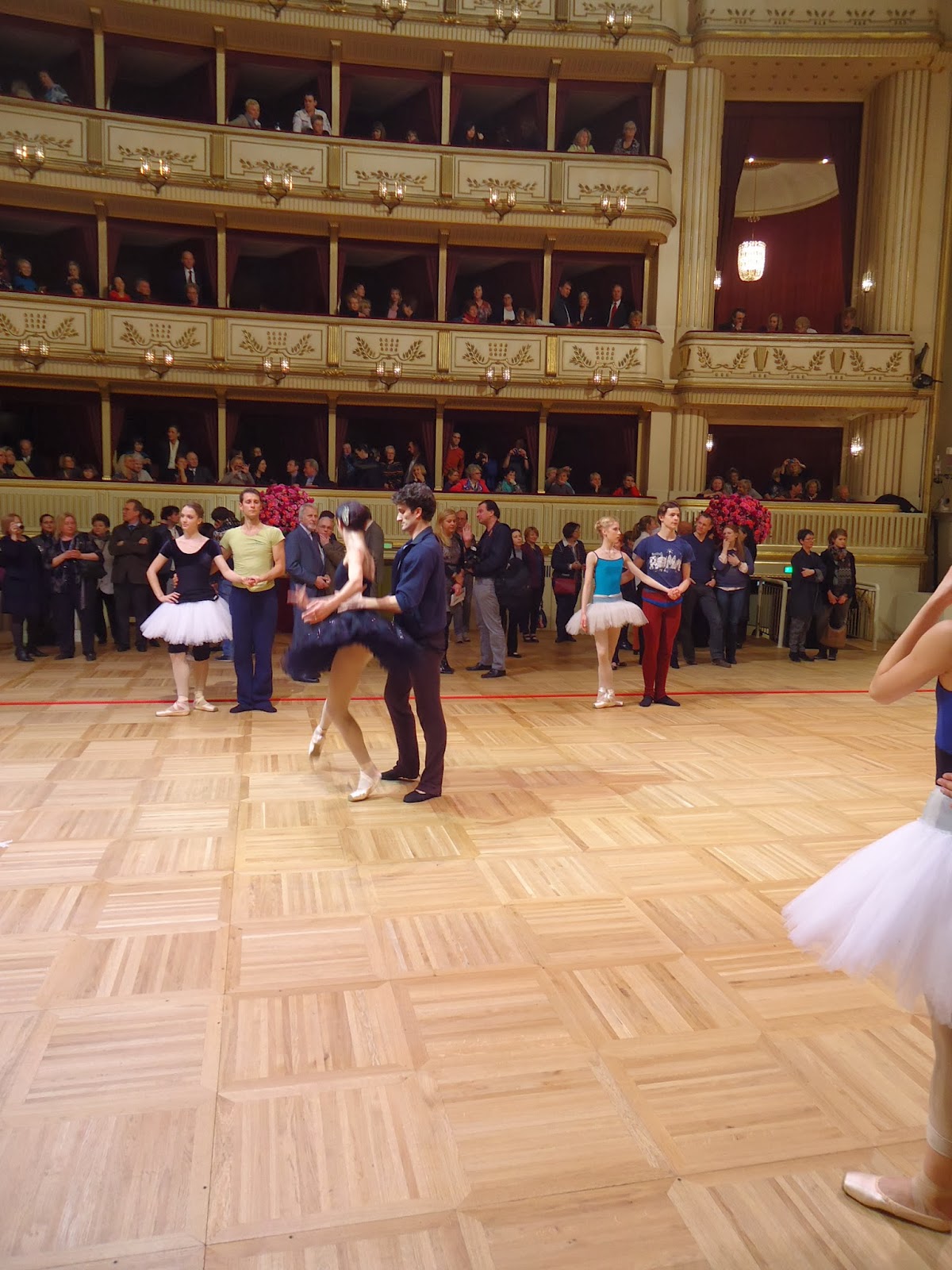
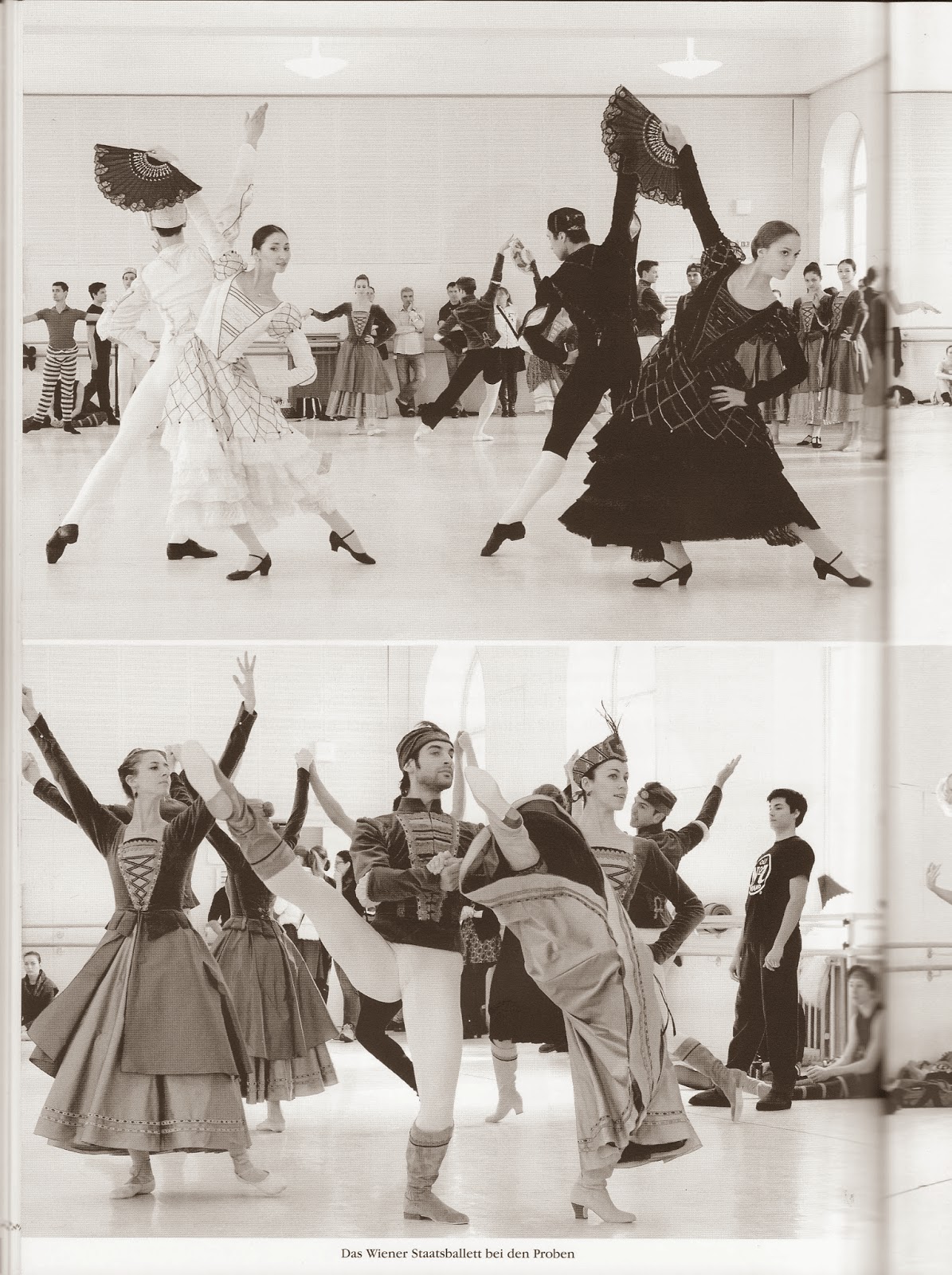
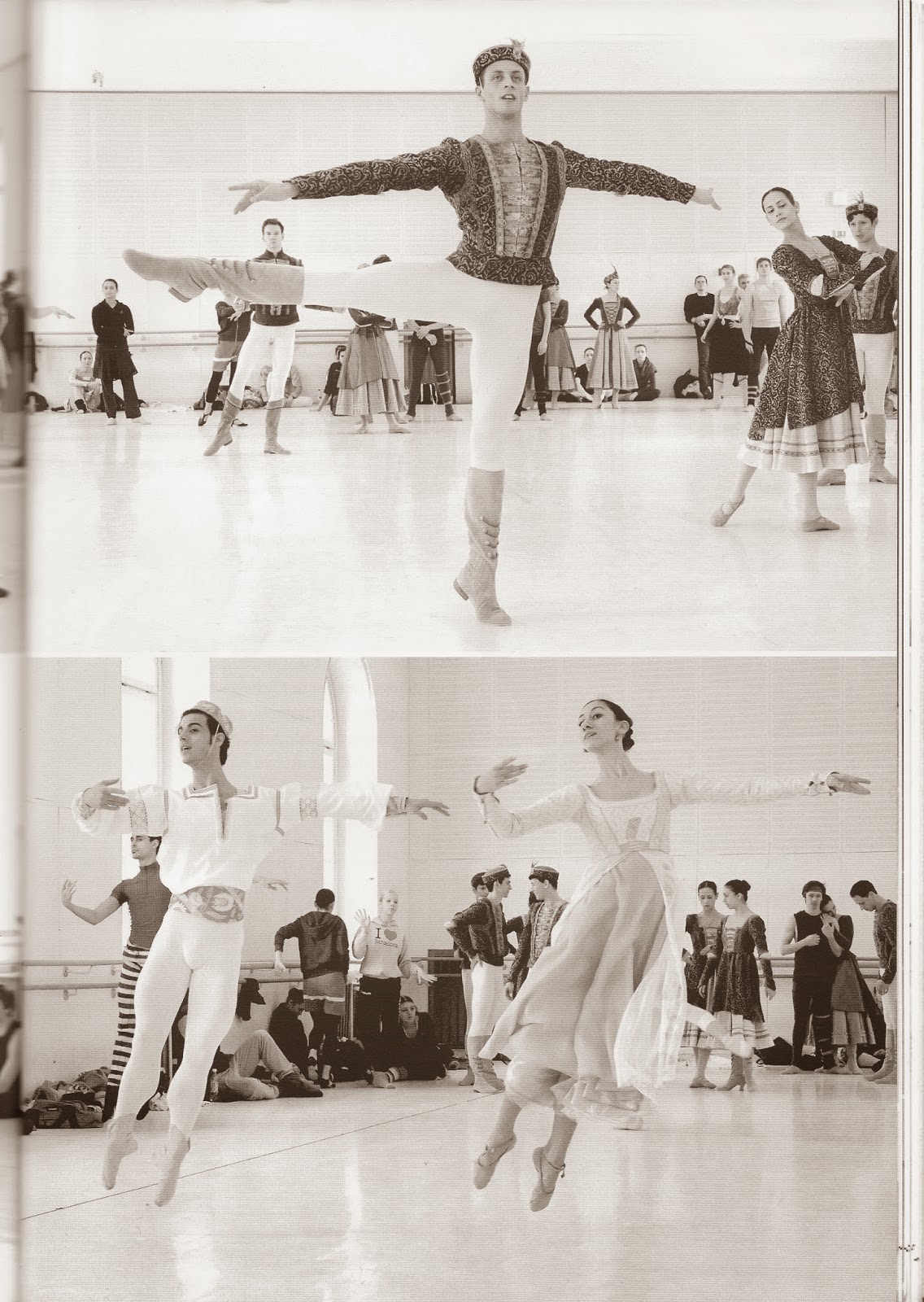
Some rehearsal pictures...
Funny (or akward) moments of the evening:
1) while the camera showed us the artists from the Opera Renato Zanella waved to the camera like a seven year old peasant boy waving to his mother on television.
Funny!
2) After that the lady that was in Mr. Legris’ company, poked him to say something like “look TV cameras”. From that second on both stood as stiff as two marble statues like posing for a photograph.... Such gaucheness and lack of savoir-faire…
Funny!
3) as the Ballet students went on stage, ORF’s moderation, Karl Hohenlohe, spoke of “Three generations meeting one another: Soloists, Corps-de-Ballet and Students”… Apart from the completely lack of logic in what he said, I ask you: should we make Mr. Hohenlohe aware that (like to a lady’s) it is quite impolite to talk about a dancer’s age?
Not funny: tasteless!
Here a very short video of the grehearsal on February 26th just a sort of preview! The Ballet as shown on TV will be soon online here.
Neste marco inesquecível do Cinema: A Star is born, 1954
Inolvidável Judy, grande James Mason, Tommy Noonan, Harold Arlen e sua fantástica música, a direção sublime de George Cukor, a camera de Al Green, a iluminação perfeita que da vida àquela atmosfera que só artistas realmente podem entender: depois de cantar uma noite inteira e vender sua alma, eles se encontram depois do show para CONTINUAR a cantar... e dar sua alma.
E para quem não me acredita: vá depois de qualquer show na Broadway ao Bar do “Algonquin” em N.Y.
Hoje só celebrando estes talentos, a voz de Judy Garland no seu apogeu… e sua interpretação… ah… maravilhosa, neurótica, viva, de carne e osso (e muitos nervos!), completamente exposta. Como Professor Higgins em “Lady” inteligentemente diria:
Não vou desperdiçar supérfluas palavras para dizer o que está aí, mais do que dito, na interpretação de
Leung Pak yue (com 9 anos de idade) no Harmonica Festival in Hangzhou, China 2009. Não é necessário…
“George Gershwin's Rhapsody in Blue" num maravilhoso, inesquecível momento…
Obrigado ao amigo Mauri por me apresentar esta maravilha!
Mesmo usada (e abusada) para fins comerciais, piegas, baratos (vezes até grotescos), esta "simples" melodia sobrevive...
Sua simplicidade é o que a torna mais fascinante, inimitável, conquistadora e, ao meu ver, muito difícil!
Aquela "simplicidade" sobre as coisas essenciais da vida, extremamente presentes no trabalho de Robert Schumann: honestidade, calor humano, sorrisos, apego e amor. As coisas "pequenas" da vida, como alguém uma vez colocou muito inteligentemente (e ironicamente) em palavras.
Quantas vezes na minha vida já ouvi: "Ah, isso é muito fácil de tocar"
Sim, verdade, encarando-se só o lado técnico... mas fácil de "sentir" e "interpretar"? Jamais.
Para mim este "sentir" é parte essencial da própria técnica e sem ele, nem o mais técnico dos técnicos nos emocionaria.
Na música, no teatro, no Ballet, no Cinema, nas Artes plásticas, na literatura...
Gosto do momento deste video: aqui "dublado" (o magnífico Arthur Rubinstein tocou) por ninguém menos do que nossa maravilhosa, querida, eterna Katharine Hepburn (Song of love, MGM, 1949).
Ela saía finalmente da longa fase de trejeitos dos anos 30 & 40 e tranformava sua arte numa coisa mais simples, translúcida, transparente, universal.
Esta é a Kate que nos encanta até hoje. Poucas desenvolveram como Kate esta virtude, este talento infinito... até o final de sua vida... aprimorando-se a cada dia até chegar aos momentos nos quais bastavam sómente um olhar - sim, um único - para delatar toneladas e toneladas de sentimentos... e simplesmente nos "emocionar simplesmente".
O talentosíssimo ingles Jonathan Pryce... Sim, talento que muito admiro. Assisti-o uma vez "live" como Prof. Higgins em "My fair Lady" no West End.
Aqui, ele, num número de “Miss Saigon” (que ele criou no West End em 1989) e numa da melhores Galas que até hoje assisti: Hey, Mr. Producer (dedicada a Sir Cameron Mackintosh, grande "producer"), London 1998…
Claro que sente-se falta da maquiagem que fazia dele um vietnamita... but who cares? O interessante personagem, sujo, indecente, imoral e amoral, esta aí...
Brilliant…
P.S. No original (Broadway & West End) baixava do teto um Cadillac - um símbolo e tanto do American Dream. Esta "Miss Liberty" vietnamita aqui foi uma criatividade (muito inventiva por sinal) para um show que tinha tantos números musicais e jamais poderia acomodar um carro "só" para um número...
♫♪♫♫♪ Girls can buy tits by the pair…
The American dream.
Bald people think they’ll grow hair…
The American dream.
Cars that have bars take you there…
The American dream.
On stage each night Fred Astaire…
The American dream.
It’s time we all entertain MY American dream!!!!!
♫♪♪♪♫♪




_poster.jpg)